Verified October 17, 2026 against Sitecore's and Microsoft's own documentation.
Sitecore in Plain Words, the series:
- Sitecore in Plain Words: XM or XP, Where Does It Run, and Who Runs What?
- What Is the Difference Between Sitecore XM and XP?
- Where Can Sitecore Run? Six Hosting Models, Layer by Layer
- Who Looks After What in Each Sitecore Hosting Model?
- Why Does Sitecore Need More Than One Server, and What Is Headless?
- Will Your Sitecore Version Lose Support, and Should You Upgrade or Migrate?
It depends on the hosting model, but your data is always yours
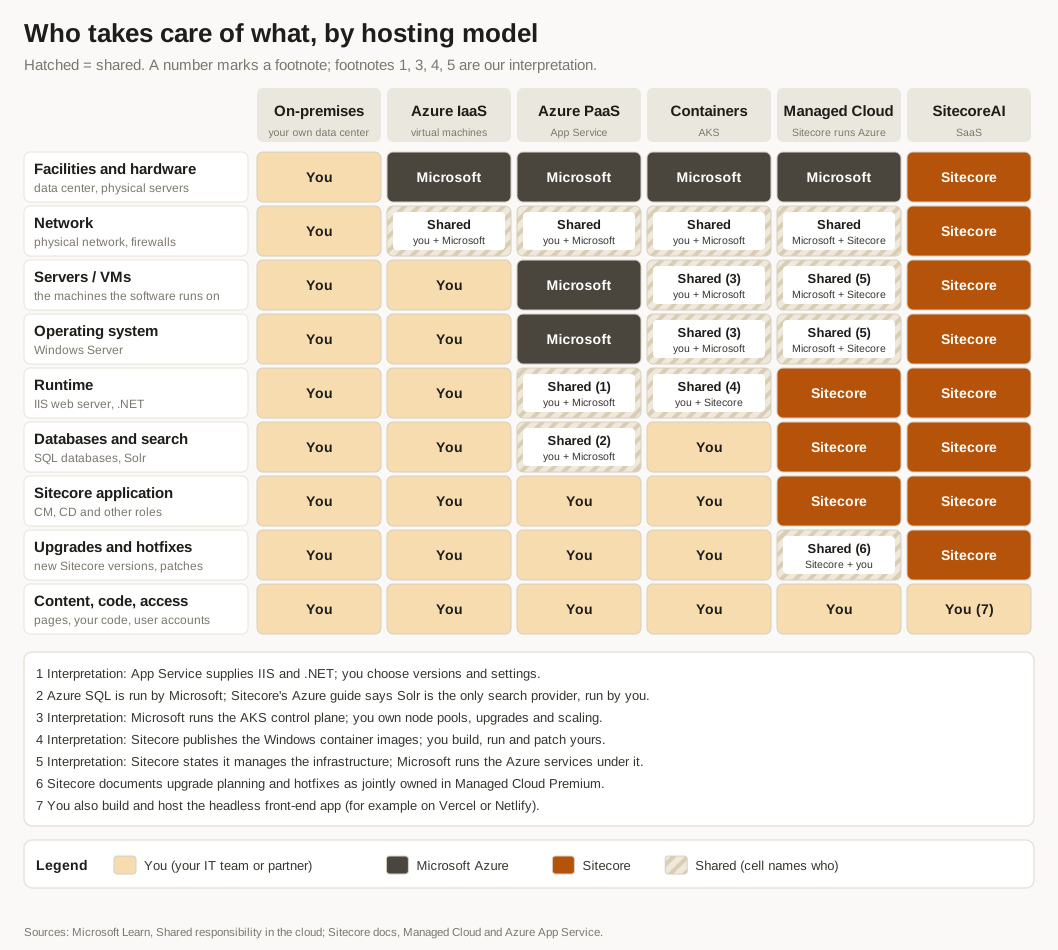
On-premises, you or your IT partner look after everything. On Azure, Microsoft takes the data centers and, on App Service, the machines and operating system; you run the rest.1 On Managed Cloud, Sitecore maintains the infrastructure and the application, and you deploy your own code and content.2 On SitecoreAI, Sitecore runs the platform and you own content, components and your front end. Whatever the model, you always keep your data, user accounts and access control.1
The matrix: all six models side by side
Rows are the layers of the stack, columns are the hosting models from Part 3. Hatched cells are shared, and the footnotes say which cells are our interpretation rather than a documented split.132
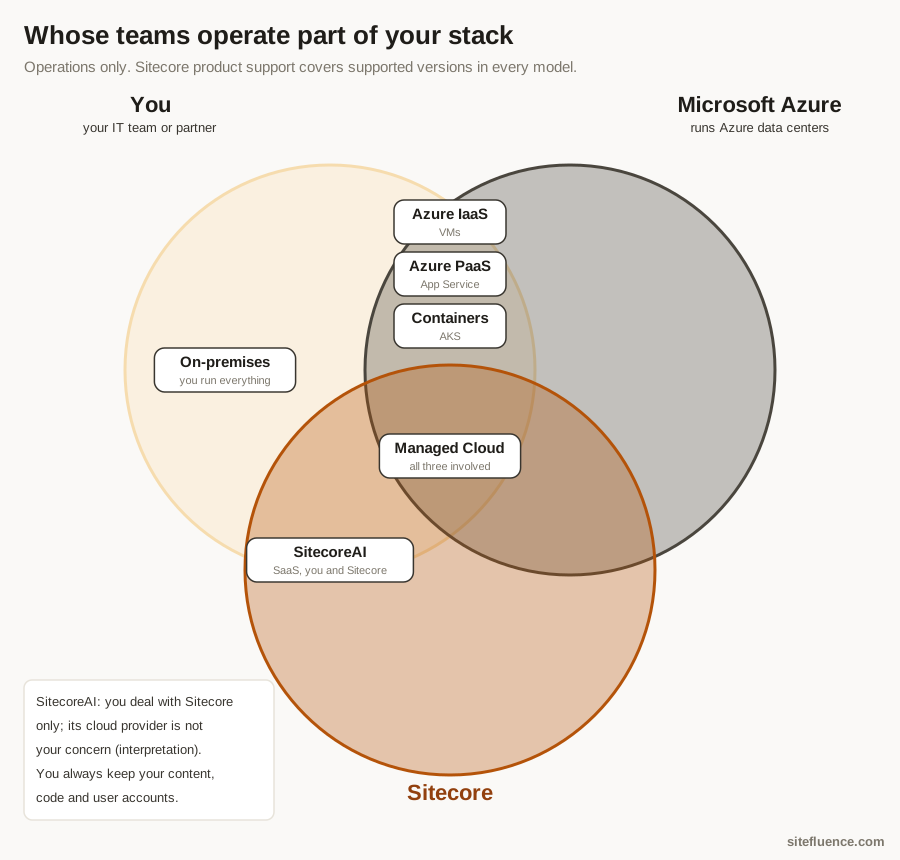
The same story as overlapping circles
Whose teams actually operate part of your stack in each model.
References
Footnotes
-
Microsoft Learn. "Shared responsibility in the cloud" ↩ ↩2 ↩3
-
Sitecore docs. "Introduction to Managed Cloud" and "Managed Cloud PaaS" ↩ ↩2
-
Sitecore docs. "Walkthrough: Deploying a new Sitecore environment to the Microsoft Azure App Service" ↩